
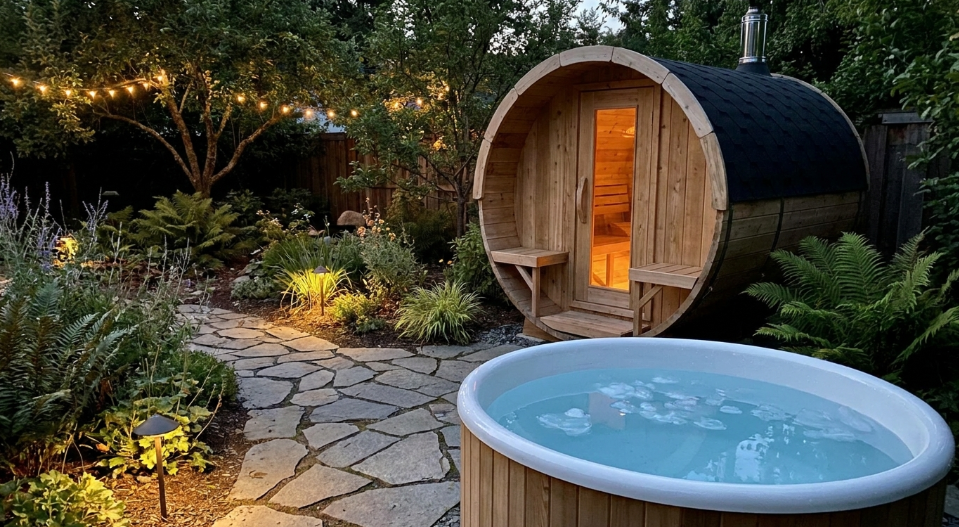
Cedar and heat-treated hemlock perform similarly as structural sauna wood, the real difference comes down to use case: cedar carries a stronger natural aroma and slightly better rot resistance, making it the better pick for outdoor units and buyers who like the scent, while heat-treated hemlock is nearly odorless, typically 15 to 25 percent cheaper, and dimensionally stable, making it the better choice for fragrance-sensitive users and indoor installations in a controlled environment.
Use Case: You Want the Classic Sauna Aroma
Cedar’s defining feature is its scent, a strong, resinous smell that many people associate directly with a traditional sauna experience. That aroma comes from natural oils in the wood, the same oils that give cedar its rot and insect resistance without any chemical treatment. If part of the appeal of owning a sauna is that specific sensory experience, cedar is the clear choice, and it holds that aroma for years longer than most other softwoods used in cabin construction.
Use Case: You’re Sensitive to Strong Wood Smells
Heat-treated hemlock is the better fit here. The heat treatment process, which uses controlled high temperature rather than chemicals, alters the wood’s cell structure to improve stability and rot resistance while also reducing the wood’s natural scent significantly compared to untreated softwoods. Many owners describe it as nearly neutral, especially compared to a freshly built cedar cabin during its first several heating cycles, when the aroma is strongest. For anyone who finds strong wood smells overwhelming in an enclosed, heated space, this is a meaningful difference, not a minor one.
Use Case: The Sauna Will Live Outdoors
Weather exposure changes the calculation. Cedar’s natural oils provide real protection against moisture, rot, and insect damage without needing an added sealant or treatment, which matters more for a unit sitting outside through rain, snow, and temperature swings than for one in a climate-controlled room. Heat-treated hemlock is also rot-resistant thanks to the treatment process, but cedar’s track record in fully exposed, uncovered outdoor installations is longer and better documented. For a covered patio or three-season porch, either works well; for a fully exposed backyard installation, cedar is generally the safer long-term bet.
Use Case: Budget Is the Deciding Factor
Heat-treated hemlock typically runs 15 to 25 percent less than comparable cedar construction, which adds up on larger three- to four-person cabins where the wood cost difference multiplies across more square footage. The performance gap between the two woods is small enough, for indoor use especially, that budget-conscious buyers are not giving up much beyond aroma and slightly lower moisture resistance by choosing hemlock. If the sauna is going indoors in a finished basement or spare room, this is usually where the savings make the most sense.
Use Case: You’re Comparing Specific Models Before Buying
Wood species is listed on nearly every cabin spec sheet, but coverage and finish quality vary between manufacturers even within the same wood type, so it is worth comparing actual listings rather than treating “cedar” or “hemlock” as a single standardized product. When comparing options side by side, the SweatDecks saunas collection lists wood species next to panel wattage and interior dimensions on each product page, which makes it easier to weigh wood choice against the other specs that matter for your specific space, alongside browsing regional dealers and other specialty sellers.
Use Case: You Live Somewhere Humid
Humidity changes how much a wood species is tested over a full year, even for a sauna, which produces its own heat and moisture cycles regardless of climate. In consistently humid regions, cedar’s natural rot resistance offers a bit more margin against the wood absorbing ambient moisture between sessions, particularly for a cabin that is not run daily. Heat-treated hemlock holds up reasonably well too, since the treatment process itself reduces the wood’s moisture content and improves dimensional stability, but it is worth checking that a specific hemlock product was treated to a rating appropriate for higher-humidity use rather than a baseline treatment meant for drier climates. When in doubt, cedar remains the more forgiving option in a humid environment.
Use Case: Resale and Buyer Perception Matter to You
If you are installing a sauna with half an eye on how it will read to a future buyer, cedar carries more immediate brand recognition. Most people who have used a sauna before associate the smell and look of cedar with quality, even if they could not explain the difference in wood treatment. Heat-treated hemlock, while a sound material choice, is less familiar to the average buyer walking through a home, so it may need a line of explanation during a showing that cedar does not. This is a minor factor compared to overall installation quality and condition, but it is worth knowing if resale perception is part of the decision.
Does Wood Choice Change Any of the Health Research?
No, and this is worth being direct about. The research on sauna bathing, largely from long-running Finnish cohort studies, is about heat exposure and session frequency, not wood species. A Mayo Clinic Proceedings review of that research found regular sauna sessions associated with lower cardiovascular and all-cause mortality risk, and a related review of heat and cold exposure physiology described the mechanisms behind those associations without any distinction by cabin material. Wood choice is a comfort, cost, and durability decision, not one that changes the health case for sauna use one way or the other. If the goal is building a session habit consistent enough to reflect what the research describes, several times a week for a stretch of years, the wood that gets you into the cabin without hesitation, whether that is cedar’s aroma or hemlock’s neutral, budget-friendly profile, is the more useful factor to weigh than any marginal difference in rot resistance.
Frequently Asked Questions
Is cedar or heat-treated hemlock better for an infrared sauna?
Neither is universally better. Cedar offers stronger natural rot resistance and aroma, while heat-treated hemlock is more budget-friendly, nearly odorless, and dimensionally stable.
Does heat-treated hemlock need any chemical treatment?
No. Heat treatment uses temperature, not chemicals, to improve stability and rot resistance without additives.
Which wood is better for someone with fragrance sensitivity?
Heat-treated hemlock, since it has a much milder scent than cedar, especially in a newly built cabin.
Is cedar worth the extra cost for an outdoor sauna?
Often yes. Cedar’s natural oils give it better weather and rot resistance, which matters more for units exposed to the elements.
Does wood choice affect how hot an infrared sauna gets?
Not meaningfully. Heater wattage and panel type control temperature, while wood choice affects aroma, cost, and durability.
References
- Laukkanen, T. et al. “Cardiovascular and Other Health Benefits of Sauna Bathing: A Review of the Evidence.” Mayo Clinic Proceedings, 2018. https://pubmed.ncbi.nlm.nih.gov/30077204/
- “Benefits and risks of sauna bathing.” The American Journal of Medicine, 2001. https://pubmed.ncbi.nlm.nih.gov/11165553/
- “Clinical Effects of Regular Dry Sauna Bathing: A Systematic Review.” Evidence-Based Complementary and Alternative Medicine, 2018. https://pubmed.ncbi.nlm.nih.gov/29849692/